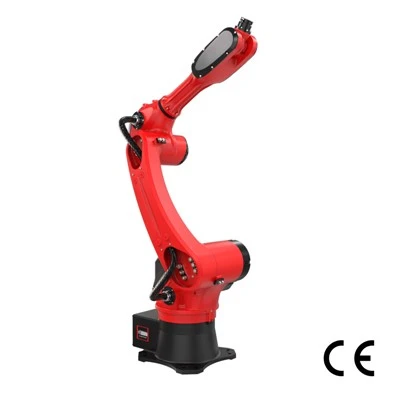
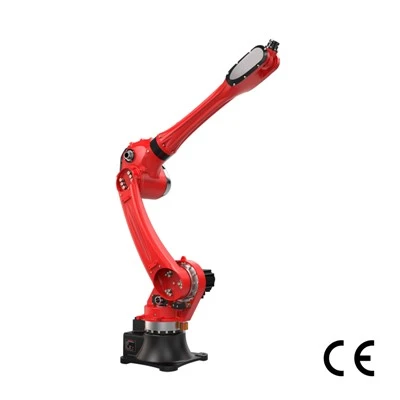
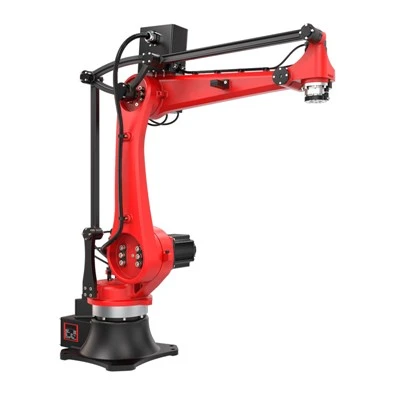
Pick and Place Robots for Industrial Automation
We manufacture pick and place robots for automated product handling, component placement, sorting, machine loading, and material transfer. Our product range includes Delta, SCARA, six-axis, and Cartesian robot configurations for different motion requirements, payloads, working envelopes, and production layouts.
As a direct manufacturer, we support product selection and configuration evaluation based on workpiece dimensions, total handling weight, required cycle time, positioning requirements, installation space, and equipment interfaces. Depending on the selected model and project scope, we can also evaluate gripper configurations, machine vision compatibility, control interfaces, and integration requirements for OEM equipment and production lines.
Looking for a Pick and Place Robot for Your Project?
- Manufacturer-direct supply: Discuss available robot models and configurations directly with our team.
- Application-based selection: Evaluate payload, reach, cycle time, positioning requirements, and installation conditions.
- Configuration and customization: Review compatible tooling, mounting arrangements, and available technical options.
- OEM and integration support: Discuss equipment interfaces, control requirements, and project-specific specifications.
-
![4 Axis Pick and Place Robot]() 4 Axis Pick and Place RobotThe RBTIC BRTIRSC0603A 4 Axis Pick and Place Robot is a SCARA robot designed for fast, repeatable handling of small workpieces. Its compact 600 mm arm supports automated picking, sorting,...
-
![Small Pick and Place Robot]() Small Pick and Place RobotThe RBTIC BRTIRUS0401A Small Pick and Place Robot is a six-axis industrial robot for handling lightweight components in compact production cells. With a 574 mm arm span, a 1 kg rated payload and...
-
![Robotic Picking Arm]() Robotic Picking ArmRBTIC six-axis robotic picking arm – with 5 kg payload, 990 mm reach, and ±0.05 mm repeatability – delivers flexible, multi-angle automated picking, part transfer, and machine loading/unloading...
-
![Pick and Place Industrial Robot]() Pick and Place Industrial RobotThe RBTIC BRTIRUS2110A is a six-axis industrial robot for transferring, orienting and placing workpieces in automated production lines. Its 10 kg payload and 2,131 mm arm length suit applications...
-
![High Speed Pick and Place Robot]() High Speed Pick and Place RobotThe RBTIC BRTIRPL1003A is a parallel-structure Delta robot designed for high-speed handling of small, lightweight components.
-
![Pick Up Robot]() Pick Up RobotThe RBTIC BRTIRUS1820A is a six-axis industrial pick-up robot designed for automated loading, unloading and workpiece transfer.
-
![Industrial Pick and Place Robot]() Industrial Pick and Place RobotThe RBTIC BRTIRUS1510A is a six-axis industrial robot with a 10 kg rated payload and 1,587 mm arm reach. Designed for automated pick-and-place operations, it provides ±0.05 mm repeatability for...


Explore Our Pick and Place Robot Range
Choose a pick and place robot based on your application requirements, installation conditions, and production targets. Available configurations and specifications depend on the models offered.

Delta Pick and Place Robots
Designed for high-speed picking, sorting, and product handling applications where fast cycle times and compact overhead installation are important.
SCARA Pick and Place Robots
Suitable for selected assembly, component placement, loading, and transfer tasks requiring horizontal movement and controlled vertical positioning.


Six-Axis Pick and Place Robots
Flexible robotic solutions for applications involving multi-directional movement, complex positioning, and handling across different working angles.
Cartesian Pick and Place Robots
Linear-motion solutions for applications requiring defined travel paths, configurable working dimensions, and integration into machinery or production equipment.
Pick and Place Robot Specifications
|
Category |
Parameter Item |
General Description / Specification Options |
|
General Information |
Robot Model / Series |
Standard part number or custom designation |
|
Kinematic Type |
SCARA, Delta (Spider), Cartesian (Gantry), 4-Axis Articulated |
|
|
Number of Axes |
Typically 3, 4, or 5 axes (including rotation axis) |
|
|
Ingress Protection (IP) |
IP20 (Standard), IP54/IP65 (Washdown/Dusty), Cleanroom ISO Class 3-5 |
|
|
Performance |
Payload Capacity (Rated / Max) |
Payload including gripper/end-effector (kg / lbs) |
|
Working Envelope / Reach |
Horizontal reach / radius and vertical stroke (Z-axis) |
|
|
Maximum Operating Range |
X/Y axis span, Z-axis stroke, Theta rotation range |
|
|
Cycle Time & Motion |
Standard Cycle Time |
Industry standard test cycle (e.g., 25mm - 300mm - 25mm pick-and-place in seconds) |
|
Maximum Speed (X-Y / Z / Theta) |
Max linear and angular velocity (mm/s or deg/s) |
|
|
Maximum Acceleration / Deceleration |
Dynamic acceleration limits for high-speed sorting |
|
|
Accuracy |
Pose Repeatability |
ISO 9283 repeatability standard (± mm or ± degrees) |
|
Path & Settling Time |
Vibration damping and settling time at target position |
|
|
End-Effector / Tooling |
Gripper Interface / Vacuum Ports |
Built-in vacuum lines, pneumatic valves, electrical I/O through quill/arm |
|
End-Arm Tooling (EOAT) Weight Limit |
Maximum allowable weight of gripper and part combined |
|
|
Control & Electrical |
Controller & Software |
High-speed multi-axis controller with conveyor tracking capability |
|
Vision Guidance Integration |
Support for 2D/3D machine vision systems for random bin picking / sorting |
|
|
Power Supply & Consumption |
Voltage, frequency, and average power draw (kVA) |
|
|
Communication & Fieldbus |
EtherNet/IP, PROFINET, Modbus, DIO for PLC/sensor integration |
Custom Pick and Place Robot Manufacturing


1. End-of-Arm Tooling and Grippers
Gripper selection depends on workpiece shape, dimensions, weight, surface characteristics, and handling method.
Depending on product compatibility and project scope, configuration discussions may cover:
- Mechanical gripping
- Vacuum-based handling
- Workpiece-specific tooling
- Tool mounting and interface requirements
- Pneumatic or electrical connections where supported
2. Working Range and Installation Configuration
Robot selection and configuration must match the available installation space and the positions between which workpieces need to move.
We review the required working envelope, axis travel, mounting position, equipment clearance, and machine layout. For project-specific arrangements, provide dimensional drawings or a layout showing the robot installation area and target handling positions.
3. Machine Vision Compatibility
Vision-guided handling may be required when workpieces vary in position, orientation, or presentation.
The evaluation may include camera-based identification, position correction, sorting requirements, and compatibility with the robot controller. Random bin picking, 3D vision, and conveyor tracking require specific hardware, software, and application validation; they should not be assumed to be available on every configuration.
4. Control Systems and Communication
Integration requirements should be confirmed before the robot configuration is finalized.
Relevant information includes the existing PLC or controller, required communication protocol, available I/O, sensor signals, safety interfaces, and the intended division of control responsibilities between the robot and other equipment.
5. Production Line and Machine Integration
For production-line applications, the robot must operate within the requirements of the surrounding equipment.
Project evaluation may cover conveyor positions, fixtures, feeding equipment, machine interfaces, installation space, workpiece flow, and operating sequences. Responsibility for complete system design, installation, programming, and commissioning should be agreed according to the project scope.
6. OEM and Repeat-Order Requirements
For OEM customers and equipment manufacturers, configuration consistency and clearly documented specifications are important for repeat production.
Provide your required model or configuration, technical drawings, interface specifications, target quantities, and documentation requirements.
How to Submit Your Requirements
Provide the following information to help us evaluate your application and prepare a relevant quotation. If some details are not yet available, send the information you have and identify the remaining requirements.
|
Information Required |
Details to Provide |
|
Application |
Picking, sorting, assembly, machine loading, or another handling task |
|
Workpiece |
Dimensions, weight, material, shape, and surface characteristics |
|
Handling Requirements |
Pickup and placement positions, orientation, and movement path |
|
Performance Targets |
Required cycle time, production capacity, and positioning requirements |
|
Robot Selection |
Preferred robot type or model, if known |
|
Tooling |
Required gripper type or existing end-effector specifications |
|
Installation |
Layout drawing, available space, mounting conditions, and equipment clearance |
|
Control Interface |
Existing PLC, controller, communication protocol, and I/O requirements |
|
Project Scope |
Robot supply only, tooling, configuration evaluation, or broader integration |
|
Purchasing Plan |
Estimated quantity, destination country, and target delivery date |
|
Validation |
Sample testing, acceptance criteria, or required technical documentation |
Quality Assurance

When purchasing pick and place robots for industrial use, product specifications, configuration consistency, documentation, and after-sales support are important considerations.
Before an order is confirmed, the applicable product configuration and technical requirements should be reviewed to establish the agreed supply scope.
1. Technical Specification Verification
Before production or order processing, the robot model and agreed technical requirements should be reviewed to reduce the risk of specification mismatches.
Key items include:
- Robot model and configuration
- Rated payload and permitted end-effector weight
- Working range and applicable axis travel
- Repeatability and cycle-time requirements
- Controller, electrical specifications, and communication interfaces
- Required accessories and agreed customization options
2. Robot Configuration and Component Inspection
Before shipment, the supplied equipment should be checked against the confirmed order and agreed supply scope.
Depending on the selected model, the inspection may cover the robot body, controller, cables, connectors, mounting accessories, grippers, and other included components.
Any project-specific tooling or accessories should be identified in the order documentation so buyers can verify that the required items are included.
3. Functional Testing Before Delivery
Functional checks help identify operational issues before the equipment reaches the buyer.
Applicable checks may include power-up, controller operation, axis movement, basic operating functions, and the operation of agreed accessories. Additional checks depend on the robot model and the confirmed test requirements.


4. Custom Configuration and Interface Verification
For robots supplied with customized tooling or intended for integration into existing equipment, configuration compatibility is an important purchasing consideration.
The review may cover:
- Gripper and end-effector compatibility
- Tool mounting and connection requirements
- Controller and PLC communication interfaces
- Required I/O signals and sensor connections
- Installation dimensions and mounting arrangements
- Agreed vision-system or peripheral-equipment interfaces
5. Inspection Records and Technical Documentation
Clear technical documentation helps buyers verify the supplied configuration, install the equipment, and manage future maintenance.
Depending on the product and agreed supply scope, available documents may include:
- Product datasheets and confirmed specifications
- Operating and installation manuals
- Electrical wiring diagrams
- Controller and configuration information
- Applicable inspection or functional test records
- Spare parts and maintenance information, where available
Submit Your Inquiry: Send the target model or application details, estimated quantity, workpiece information, and any available technical drawings.
Review Technical Requirements: Confirm the required payload, working range, cycle time, operating conditions, tooling, installation arrangements, and control interfaces.
Evaluate Product Compatibility: Determine whether an available standard model meets the requirements or whether additional accessories, a different configuration, or further application assessment is necessary.
Receive a Quotation: Review the proposed model, configuration, included components, price, lead time, payment terms, and delivery conditions.
Confirm Specifications and Order
Finalize the technical specifications, supply scope, documentation, payment arrangements, delivery terms, and any agreed testing or acceptance requirements.
Production and Inspection
The order proceeds according to the confirmed production arrangements and applicable inspection requirements. Any project-specific testing or documentation should follow the agreed scope.
Shipment and After-Sales Support
Confirm shipment documentation, delivery arrangements, and the applicable warranty and technical support process.
FAQ
As one of the most professional pick and place robot manufacturers and suppliers in China, we have world-leading production equipment and strong manufacturing capabilities. Please feel free to buy durable pick and place robot for sale here from our factory. Also, custom service is available.
Popular Products