Welding Robot Manufacturer for Industrial Welding Automation
RBTIC manufactures industrial robots and provides automation system integration for welding applications. We support manufacturers, OEMs, and system integrators with robot selection, workpiece positioning, tooling coordination, programming, and project implementation.
Whether you need a welding robot for a new production cell or a robot to integrate into existing equipment, share your workpiece drawings, welding requirements, and production targets to evaluate a suitable configuration and quotation.
-
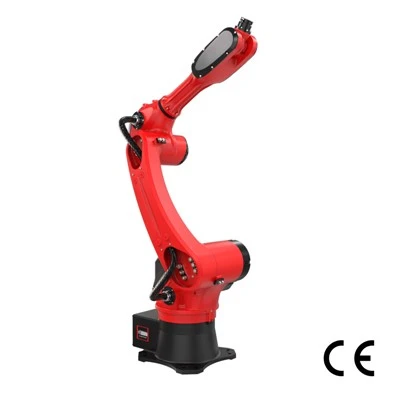
![6-axis Welding Robot]() 6-axis Welding RobotThe RBTIC BRTIRUS1510A is a six-axis industrial robot designed for automated welding of metal components and fabricated assemblies. With a 10 kg payload, 1,587 mm arm reach and ±0.05 mm...
-
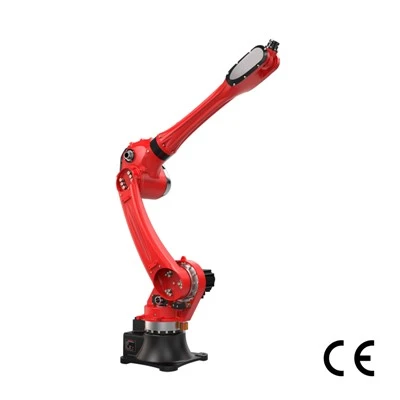
![Welding Industrial Robot]() Welding Industrial RobotThe RBTIC BRTIRWD1506A is a six-axis industrial welding robot with a hollow wrist for internal cable routing and multi-angle torch positioning. It supports robotic welding applications using...
-
![Robotic Arm for Welding]() Robotic Arm for WeldingA six-axis industrial robot for welding and material handling – with flexible reach and repeatability, supporting programmed torch orientations for structural fabrication, aluminum guardrails,...
-
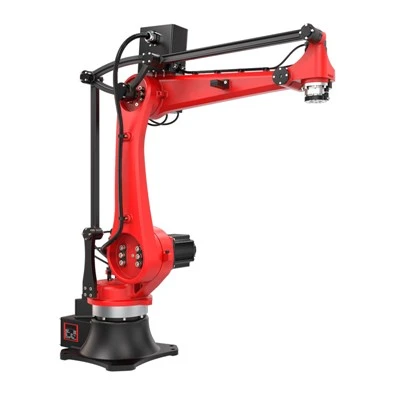
![Automatic Welding Robot]() Automatic Welding RobotA six-axis palletizing robot arm – paired with application-specific end-of-arm tooling – for flexible palletizing, depalletizing, loading/unloading, and material handling of cartons, bundled...


Welding Robot Types & Model Range
Arc Welding Robots
Designed for automated arc welding of fabricated metal components, frames, brackets, and machinery parts. Model selection depends on workpiece dimensions, torch and cable payload, weld-point accessibility, and the required welding process.
MIG/MAG or TIG configurations should be confirmed against the selected robot, welding equipment, torch package, and application requirements.
Spot Welding Robots
Designed for resistance spot welding applications involving repeated weld locations on sheet-metal assemblies and compatible fabricated components. Selection depends on welding-gun weight, working reach, required access, and the integration of the robot with the spot-welding equipment.
For production lines, assess gun configuration, fixture positioning, cycle-time requirements, and coordination with upstream and downstream equipment.
Collaborative Welding Robots
Collaborative robots may suit selected welding tasks that require flexible deployment, frequent product changeovers, or simplified programming. Their suitability depends on workpiece geometry, welding equipment, required output, and the safety assessment of the complete workcell.
For higher-volume or more complex welding applications, compare collaborative and conventional industrial robot configurations before selecting a solution.
Selecting the Right Welding Robot
|
Selection factor |
What to verify |
|
Welding process |
MIG/MAG, TIG, or resistance spot welding, subject to equipment compatibility |
|
Workpiece dimensions |
Overall size, weight, weld locations, and required access |
|
Robot payload |
Torch, cables, sensors, adapters, and other wrist-mounted equipment |
|
Working reach |
All required weld points, torch angles, and potential interference |
|
Production target |
Required output, complete cycle time, loading and unloading, and changeover |
|
Workcell configuration |
Fixtures, positioners, mounting arrangement, guarding, and available floor space |
|
Existing equipment |
Welding power source, controller, PLC, communication interfaces, and utilities |

Workpiece and Weld Accessibility
Review part dimensions, weld locations, joint geometry, and torch access to identify potential reach limitations and fixture interference.
Robot, Torch and Tooling Compatibility
Check the complete wrist-mounted load, working reach, torch orientation, cable routing, and mounting requirements against the selected robot's specifications.
Welding Equipment and Control Interfaces
Identify the welding power source, process-control requirements, controller interfaces, and communication needs before confirming equipment compatibility.
Production and Workcell Requirements
Consider target cycle time, part loading and unloading, fixture arrangements, positioner requirements, and product changeovers when defining the proposed configuration.
Welding Applications & Workpiece Requirements


Structural Frames & Fabricated Metal Components
For frames, brackets, supports, and fabricated assemblies, assess weld length, joint access, part positioning, and the number of sides that must be welded. A suitable arrangement may require a six-axis robot, dedicated fixtures, or a workpiece positioner.
Sheet-Metal Assemblies
For sheet-metal parts, review material thickness, joint gaps, distortion risks, fixture repeatability, and the selected welding process. Process trials may be needed to establish suitable welding parameters and assess finished-weld quality.
Automotive & High-Volume Components
For repeat production, assess cycle-time targets, part presentation, fixture repeatability, changeover requirements, and upstream and downstream equipment.
Machinery Housings & Multi-Sided Weldments
For complex housings and multi-sided assemblies, assess torch access, wrist orientation, fixture interference, cable routing, and coordinated workpiece positioning. A rotary positioner or external axis may be appropriate for selected applications.
Stainless Steel & Aluminum Fabrications
Material and joint design affect process selection, heat input, joint preparation, and weld quality. Confirm that the robot, torch, power source, wire-feeding equipment, and process parameters are suitable for the intended material and joint.
Information Required for an Application Review
To evaluate a suitable configuration, provide as many of the following as available:
- Workpiece drawings or 3D CAD files
- Material type and thickness
- Workpiece dimensions and weight
- Weld-joint locations, joint types, and approximate weld lengths
- Required welding process and target production volume
- Target cycle time and expected product changeover frequency
- Existing fixtures, welding equipment, and robot models, if applicable
- Required weld-quality standards and inspection criteria
Welding Robot Configuration & Integration Compatibility
Robot Arm, Torch & Tooling
Verify rated payload, working reach, mounting position, wrist configuration, torch dimensions, and cable routing. The payload assessment must account for the complete tooling package and applicable wrist load limits.
Welding Power Source & Process Equipment
Identify the required welding process and the manufacturer and model of the existing or proposed power source. Confirm communication interfaces, process-control functions, wire feeding, torch configuration, and any additional hardware or software required.
Fixtures, Positioners & External Axes
Fixture and positioner selection affects weld access, part repeatability, and production cycle time. Depending on the application, the system may require dedicated clamping fixtures, rotary positioners, conveyors, or coordinated external axes.
Robot Controller, PLC & Factory Interfaces
Define operating signals, start and stop commands, fault feedback, I/O requirements, communication protocols, and external equipment interfaces. For existing production lines, identify the current PLC, interface restrictions, and integration responsibilities.
Workcell Layout & Safety
Review robot movement, operator access, welding arc exposure, fumes, spatter, maintenance clearance, and material flow. Guarding, interlocks, safety-rated control functions, and other protective measures must be determined through an application-specific risk assessment.
Robot Package & Scope of Supply

Robot Arm & Controller
For OEMs and integrators building their own welding workcells. Confirm the included robot, controller, cables, standard accessories, technical documentation, and any separately required welding equipment.
Welding Robot Package
For buyers requiring a robot configured around a specified welding process. Depending on the agreed scope, the package may include the robot, controller, torch mounting components, cable package, welding power source interface, and selected welding accessories.
Integrated Robotic Welding Workcell
For projects requiring a coordinated automation solution. Subject to project scope, the system may include the robot, welding equipment, fixtures, positioner, conveyors, safety equipment, control integration, programming, and commissioning.
Customized Welding Automation System
For applications involving complex workpieces, multiple coordinated operations, existing production-line restrictions, or special cycle-time requirements. RBTIC can assess the required robot configuration and auxiliary equipment based on the project specification.
Confirm These Items Before Ordering
Every quotation should clearly distinguish:
- Included equipment, standard accessories, and optional components
- Customer-supplied equipment and required factory utilities
- Programming, communication setup, and integration responsibilities
- Installation, commissioning, and acceptance-test scope
- Training, documentation, spare parts, and after-sales support
- Delivery milestones, warranty terms, and separately charged services
Engineering Support for Welding Robot Projects
Application Review & Robot Selection
Review workpiece drawings, weld locations, tooling loads, required reach, and production targets to identify potential configuration limitations before finalizing the robot selection.
Layout & Equipment Coordination
Assess the proposed robot layout, fixture arrangement, positioner requirements, auxiliary equipment, and workcell interfaces using the available project information.
Programming & System Integration
Depending on the agreed scope, support may include robot programming, communication setup, equipment coordination, debugging, and commissioning.
Technical Handover
Provide the documentation and operating information specified in the project agreement, which may include controller information, interface details, operating instructions, programming documentation, and maintenance information relevant to the supplied configuration.
Manufacturing Quality & Technical Documentation
Application Review and Robot Selection
RBTIC can review workpiece drawings, welding requirements, tooling payload, working reach, and production targets to identify suitable robot configurations for further evaluation.
Layout and Reachability Assessment
Where suitable CAD data and engineering resources are available, the proposed configuration can be assessed for weld-point accessibility, fixture interference, robot movement, and positioner requirements.
Welding Trials and Process Evaluation
Where appropriate equipment and testing resources are available, sample welding trials can be arranged by agreement. The workpiece material, joint design, process conditions, inspection method, and acceptance criteria should be defined before testing.
Programming, Integration and Commissioning
Depending on the agreed project scope, engineering support may include robot programming, auxiliary equipment coordination, communication setup, debugging, commissioning, and coordination with the customer's engineering team or designated system integrator.
Technical Documentation and Handover
Documentation should match the supplied configuration and contracted scope. Relevant deliverables may include:
- Robot and controller datasheets
- Installation and operating manuals
- Electrical connection and interface documentation
- Programming and maintenance instructions
- Spare-parts information
- Applicable inspection and test records
- Relevant conformity declarations and certificates
Manufacturing Capacity
RBTIC combines industrial robot manufacturing, assembly, and automation system integration. The company's published profile reports more than 10 years of automation experience, a 12,000 m² manufacturing base, service to more than 40 countries and regions, and over 1,000 automation projects delivered.
Delivery, Warranty & After-Sales Support
Delivery Lead Time
RBTIC publishes a typical 30–60-day timeframe for customized projects. Actual lead time depends on the selected configuration, customization requirements, component availability, and project scope.
The quotation should specify the applicable lead time, the milestone from which it is calculated, shipment arrangements, and any customer approvals required before production or delivery.
Warranty Coverage
RBTIC states that its robot products are covered by a 12-month warranty. Buyers should confirm the applicable warranty terms, including the start date, covered components, exclusions, claim procedure, and responsibilities for third-party welding equipment and accessories.


Spare Parts and Maintenance
Before production starts, identify recommended spare parts, consumables, maintenance intervals, and replacement procedures for the selected configuration.
Confirm spare-parts availability, pricing, ordering arrangements, and expected delivery conditions for critical components. Consumables and routine maintenance items should be distinguished from components covered by warranty.
Remote Technical Support and Training
RBTIC provides remote technical support and online or on-site training options, subject to the applicable service arrangement.
Before ordering, confirm support channels, operating hours, language availability, response arrangements, training scope, on-site service fees, and geographic coverage. For production-critical applications, agree on escalation procedures and spare-parts arrangements in advance.
FAQ
As one of the most professional welding robot manufacturers and suppliers in China, we have world-leading production equipment and strong manufacturing capabilities. Please feel free to buy durable welding robot for sale here from our factory. Also, custom service is available.
Popular Products