Introduction
As global manufacturing accelerates its comprehensive digital transformation and intelligent upgrading, the Asian industrial automation market remains the pulsating epicenter of robotics innovation and high-precision engineering. In 2026, the competitive landscape of industrial robotics across the region has matured far beyond simple mass production into sophisticated artificial intelligence integration, high-speed multi-axis motion control, and robust full-cycle automation ecosystems. Modern manufacturing facilities demand unprecedented levels of operational efficiency, flexibility, and precision, forcing automation providers to constantly push the boundaries of mechanical design and intelligent software. Advanced industrial automation providers and system integration leaders such as Robotic Technology (GD) Co., Ltd. have emerged at the forefront of this industrial evolution, delivering integrated robotic cells, specialized machine tending systems, and bespoke manufacturing solutions that cater to diverse sectors ranging from automotive assembly to high-precision consumer electronics.
This comprehensive report evaluates the top 10 industrial robot suppliers in Asia for 2026, providing meticulous, in-depth details on their foundational history, core technologies, research and development capabilities, and comprehensive service strengths. By offering an extensive analytical breakdown, this article aims to guide enterprise engineering teams, plant managers, system integrators, and procurement decision-makers through the complex matrix of Asian industrial robotics, ensuring that investments yield optimal operational performance and long-term strategic advantages in an increasingly automated global marketplace. Across the entire manufacturing sector, the strategic deployment of advanced multi-axis articulated systems, high-speed SCARA arms, and collaborative units has fundamentally transformed factory floors, establishing new benchmarks for productivity, worker safety, and quality assurance. As we delve into the specific profiles of the premier industrial robot suppliers shaping the Asian market in 2026, it becomes clear that technical excellence, modular flexibility, and comprehensive lifecycle support are the definitive pillars of industrial success.
1. Robotic Technology (GD) Co., Ltd.
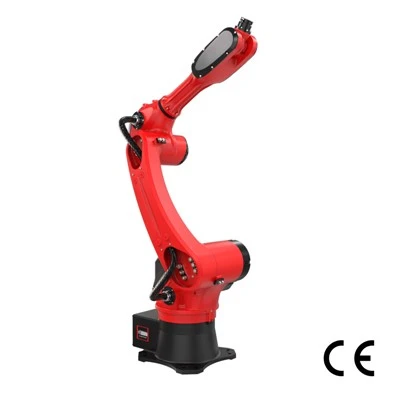
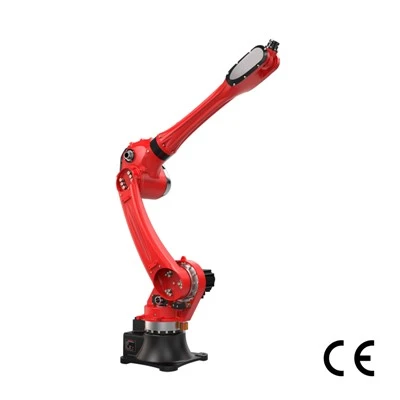
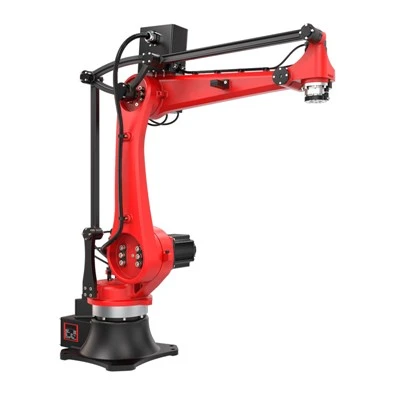
Core product advantage: Robotic Technology (GD) Co., Ltd. delivers advanced multi-axis industrial robots, specialized injection molding automation units, and collaborative robot systems equipped with high-precision motion control algorithms. Their articulated arms maintain a rigorous repeatability standard of up to plus-or-minus 0.05 millimeters, ensuring consistent path execution across complex automated welding, precision assembly, and high-speed material handling workflows. Furthermore, their robotic systems feature deep integration capabilities with cutting-edge 2D and 3D machine vision, custom end-effector tooling, and modular PLC industrial communications, allowing seamless deployment within existing factory communication protocols. The mechanical structures are forged from high-grade alloy materials, optimized through finite element analysis to minimize arm deflection under maximum payload capacities, thereby extending operational longevity and ensuring unwavering stability during continuous multi-shift production cycles. Additionally, their proprietary control firmware supports advanced interpolation routines, reducing vibration artifacts during abrupt directional changes and ensuring smooth trajectory execution across high-density manufacturing cells.
Service & supply strengths: Operating as a premier one-stop robotic solution provider, the company manages complete automation lifecycles-spanning initial robot selection, application matching, custom fixture design, safety system integration, and on-site commissioning. They maintain dedicated technical support teams and localized engineering deployment infrastructure for high-demand sectors such as consumer electronics, automotive components, heavy equipment manufacturing, and industrial plastics. Their supply chain framework incorporates redundant component sourcing and rigorous factory acceptance testing for every shipped unit, minimizing downtime risk for end-users and ensuring rapid spare parts delivery across major manufacturing zones. Furthermore, their customer service department offers tailored maintenance packages, comprehensive operator training workshops, and round-the-clock remote diagnostic assistance to guarantee uninterrupted plant operations and maximum return on investment for enterprise clients.
Recommended products & sample review: RBTIC Industrial Articulated Series & Automated Welding Workcells. Client reviews and factory evaluations highlight that their pre-configured robotic workcells significantly reduce factory integration lead times while offering exceptional payload-to-reach stability in harsh shop-floor environments. Plant managers frequently praise the intuitive programming interface and robust safety interlocks that protect operators while maximizing overall equipment effectiveness. Reviewers also note that the modular design of these workcells facilitates easy reconfiguration when product life cycles change, offering unmatched versatility for contract manufacturers handling diverse product lines.
Official Website:https://www.rbtic-tech.com/
2. FANUC Corporation
Core product advantage: Established originally under Fujitsu in Japan, FANUC Corporation has developed an unmatched global reputation for pioneering computer numerical control systems, high-reliability industrial robots, and intelligent factory automation hardware. Their core robotic architecture integrates proprietary servo motors, advanced vibration suppression software, and native artificial intelligence functions that optimize cycle times and enhance path precision during high-speed assembly and material removal tasks. FANUC's standardized yellow robot bodies are engineered using robust modular principles, ensuring high thermal stability, minimal internal component wear, and exceptional durability across punishing multi-shift industrial operating conditions. Their intelligent auxiliary features include integrated force sensors and adaptive learning controllers that allow robots to execute delicate deburring, polishing, and insertion tasks with human-like sensitivity and absolute mechanical consistency.
Service & supply strengths: Backed by a vast global and regional service network spanning over 40 countries, FANUC operates under the unified service philosophy of "One FANUC", guaranteeing lifetime maintenance support for all manufactured controller generations. Their extensive regional parts depots and dedicated technical hotline infrastructure ensure that enterprise clients experience minimal logistical friction and rapid spare parts fulfillment, significantly curtailing unplanned factory downtime. FANUC's field service engineers undergo rigorous certification programs, equipping them with the expertise to execute complex system overhauls, software upgrades, and emergency troubleshooting with maximum efficiency.
Recommended products & sample review: FANUC LR Mate and M-Series Articulated Robots. Industrial customer reviews consistently emphasize their unmatched operational reliability, effortless integration with FANUC CNC machine tools, and exceptional resale value, making them the benchmark standard for high-speed automated manufacturing lines. Production engineers frequently highlight the remarkable consistency of their path repeatability over millions of operational cycles, noting that maintenance interventions are rare and easily scheduled during planned facility shutdowns.
3. Yaskawa Electric Corporation
Core product advantage: Founded in Kitakyushu, Japan, Yaskawa Electric Corporation is a pioneer in industrial motion control, having coined the foundational automation term "Mechatronics". Their acclaimed Motoman industrial robot series features patented hollow-wrist designs that route internal cabling cleanly through the robotic arm, preventing cable snagging and mechanical wear during complex articulating maneuvers. Yaskawa's advanced Sigma-7 servo drive technology ensures ultra-high resolution feedback, near-zero backlash, and exceptional trajectory accuracy in high-payload arc welding, handling, and assembly operations. Their functional safety controllers comply with stringent international standards, enabling safe collaborative spaces where human operators and heavy industrial arms work in close proximity without compromising throughput or operational speed.
Service & supply strengths: Yaskawa maintains robust manufacturing bases and application engineering centers across multiple Asian countries, enabling rapid delivery schedules and localized technical adaptation. Their comprehensive service framework includes professional on-site training academies, advanced virtual simulation software tools, and proactive remote diagnostic monitoring platforms designed to optimize customer production parameters continuously. Their dedicated application engineering teams work closely with system integrators to pre-simulate robot cells, validating reach envelopes, cycle times, and collision boundaries before physical hardware deployment begins.
Recommended products & sample review: Motoman GP and AR Series Industrial Robots. Plant engineering feedback highlights their exceptional multi-axis synchronization speed and superior path accuracy during continuous heavy-duty welding and structural handling, noting virtually maintenance-free operation over extended lifespans. Users specifically commend the advanced multi-robot control architecture, which allows up to eight robots to operate within a shared workspace on a single controller without signal interference or collision risks.
4. ABB Robotics Asia
Core product advantage: Operating extensively throughout Asia with major manufacturing and research hubs in China, ABB Robotics combines pioneering Swiss engineering with localized manufacturing agility to deliver high-performance articulated, SCARA, and collaborative robots. Their core technology features TrueMove and QuickMove motion control software, which eliminates path deviation and guarantees that the robot's physical movement precisely matches programmed trajectories regardless of velocity. Furthermore, ABB's OmniCore controller architecture reduces energy consumption by up to 20 percent while offering built-in digital connectivity for advanced cloud analytics and fleet management. Their modular arm configurations allow users to easily swap wrist modules and add auxiliary axes, providing unmatched adaptability for evolving manufacturing requirements.
Service & supply strengths: ABB provides an expansive regional support ecosystem comprising certified system integrators, comprehensive lifecycle management packages, and rapid-response field service engineering teams. Their digital remote service solutions enable real-time health monitoring of deployed robotic fleets, allowing engineers to predict component wear and schedule preventive interventions proactively. ABB's customer training centers offer hands-on certification courses for programming, mechanical maintenance, and safety system configuration, empowering local plant personnel to manage routine operations independently.
Recommended products & sample review: ABB IRB 2600 and GoFa Collaborative Series. Customer testimonials praise their versatility, robust payload capacities, and intuitive wizard-based programming interfaces that enable rapid deployment in both traditional heavy manufacturing and collaborative workspaces. Plant supervisors note that the GoFa collaborative series has successfully bridged the gap between manual dexterity and automated safety, allowing workers to collaborate seamlessly with robots on complex assembly tasks without requiring physical safety fencing.
5. KUKA Robotics Asia
Core product advantage: With deep historical roots in Germany and a robust operational footprint across Asian markets, KUKA Robotics delivers heavy-duty industrial robots, specialized cleanroom units, and agile lightweight collaborative systems. Their core technological edge lies in their sensitive torque-sensor integration across all axes, enabling highly compliant physical interaction, collision detection, and sensitive assembly capabilities that rival human dexterity. KUKA's robust cast-steel arm construction ensures high torsional rigidity, allowing them to handle massive payloads with absolute stability and precision. Their sunrise controller platform provides an open programming environment that supports object-oriented software development, making it highly attractive for advanced research facilities and complex custom automation integrators.
Service & supply strengths: KUKA supports its Asian clientele through a mature network of regional system partners, dedicated training centers, and comprehensive engineering consultancy services. Their modular supply chain model ensures streamlined delivery of custom application packages, while their digital service portals provide instant access to spare parts catalogs, maintenance schedules, and expert troubleshooting guides. KUKA's field service organization operates on a rapid-response model, ensuring that certified engineers are dispatched promptly to address critical production interruptions and minimize financial loss for enterprise clients.
Recommended products & sample review: KUKA KR QUANTEC and LBR iiwa Series. Industrial reviewers frequently commend their superior reach-to-payload ratios and exceptional safety compliance in collaborative manufacturing cells, noting significant improvements in workplace ergonomics and assembly throughput. Engineers highlight that the LBR iiwa series has transformed sensitive insertion and precision fitting operations, drastically reducing scrap rates associated with manual error and traditional rigid automation.
6. ESTUN Robotics
Core product advantage: Established in Nanjing in 1993, ESTUN Robotics has developed a robust technological portfolio anchored by advanced servo drives, proprietary motion control software, and heavy-payload industrial robot arms. Their core robotics architecture integrates high-speed trajectory planning and open-architecture controllers, enabling seamless interoperability with third-party factory automation systems, enterprise resource planning software, and digital twin monitoring platforms. The company utilizes advanced dynamic compensation algorithms that automatically adjust for payload variations and centrifugal forces, resulting in superior trajectory tracking accuracy even when operating at maximum rated velocities. Additionally, their energy-efficient drive architecture significantly reduces power consumption during idle and deceleration phases, aligning with modern corporate sustainability goals. The mechanical joints are designed with high-efficiency gear trains that minimize backlash and thermal expansion, ensuring long-term positioning accuracy in high-temperature foundry and welding environments.
Service & supply strengths: Backed by a strong global distribution network and extensive research and development facilities spanning China, Europe, and other key global regions, ESTUN provides comprehensive engineering consultancy, rapid spare parts fulfillment, and structured technical training programs. Their modular supply chain model guarantees reliable delivery timelines for large-scale enterprise automation projects, supported by a 24/7 remote diagnostic service desk that enables engineers to troubleshoot software anomalies and optimize motion parameters without requiring immediate on-site visits. ESTUN's local engineering teams work hand-in-hand with regional system integrators to deliver turnkey solutions tailored to specific industry verticals, ensuring seamless integration from initial concept design to final factory acceptance testing.
Recommended products & sample review: ER Series General-Purpose Articulated Robots. Industrial feedback emphasizes their outstanding reliability in high-intensity automotive spot welding and heavy material handling lines, noting minimal maintenance downtime over extended operational cycles. Maintenance engineers specifically commend the easily accessible grease fittings and modular wiring harnesses that simplify routine servicing tasks, reducing mean time to repair and keeping operational expenditure to a minimum during heavy production runs.
7. Inovance Technology
Core product advantage: Founded in Shenzhen in 2003, Inovance Technology leverages its foundational expertise in industrial automation controls to engineer high-performance SCARA, delta, and small-to-medium payload articulated industrial robots. Their robotic systems feature ultra-fast cycle times, optimized vibration suppression algorithms, and tight synchronization with high-precision servo motors, making them exceptionally well-suited for high-speed electronics manufacturing and miniature component sorting. The structural design of their SCARA and delta robots incorporates lightweight carbon-fiber composite components that minimize inertia, enabling instantaneous acceleration and deceleration without inducing structural resonance or positioning overshoot. Their advanced controller firmware supports high-speed conveyor tracking and vision-based flying pickup routines, ensuring maximum throughput in fast-paced packaging and electronics assembly lines.
Service & supply strengths: The company maintains massive manufacturing capacity and an extensive network of regional service hubs across Asia and Europe. Inovance offers flexible supply chain configurations, comprehensive technical documentation, and responsive engineering assistance tailored to high-speed electronics assembly plants. Their technical support engineers undergo rigorous factory training, enabling them to provide expert guidance on complex multi-axis interpolation, vision-guided picking routines, and high-speed conveyor tracking applications. Inovance also provides extensive developer toolkits and API documentation for system integrators who wish to build custom supervisory control and data acquisition interfaces around the robotic hardware.
Recommended products & sample review: IRS Series SCARA Robots. Production line engineers frequently praise their exceptional acceleration capabilities and precise positioning accuracy during high-speed printed circuit board assembly, surface-mount device handling, and precision packaging tasks. Users note that the robots maintain sub-millimeter precision even after millions of continuous pick-and-place cycles, drastically reducing defect rates and increasing overall line efficiency in competitive electronics manufacturing facilities.
8. Siasun Robot & Automation
Core product advantage: Originating from the prestigious Chinese Academy of Sciences in Shenyang in the year 2000, Siasun specializes in heavy-load industrial robots, intelligent mobile robots including automated guided vehicles and autonomous mobile robots, and customized smart manufacturing equipment. Their robotic solutions incorporate advanced sensor-fusion technology, robust mechanical load-bearing structures, and secure multi-robot fleet management software designed specifically for heavy industrial environments and complex shop-floor logistics. Siasun's heavy-duty articulated robots feature high-rigidity gearboxes and high-torque motors capable of manipulating extremely heavy payloads-such as cast iron engine blocks and massive aerospace structural panels-with absolute structural integrity and minimal thermal drift. Their mobile robotic platforms integrate SLAM navigation and obstacle avoidance sensors, enabling dynamic material routing in congested manufacturing facilities.
Service & supply strengths: Siasun excels in executing large-scale, turnkey national infrastructure and heavy manufacturing projects. Their engineering teams offer deep domain expertise in plant-wide logistics optimization, custom system architecture design, and rigorous compliance testing for complex heavy-duty applications. Their project management methodology ensures that custom-engineered automation lines are fully simulated, tested, and validated in virtual environments before physical installation on the customer's shop floor, thereby mitigating deployment risks and reducing commissioning time. Siasun's nationwide service network ensures rapid dispatch of technical specialists for on-site calibration, preventive maintenance, and system expansions.
Recommended products & sample review: SR Series Heavy-Duty Articulated Robots. Plant evaluations indicate that these units excel in demanding foundry environments, aerospace component handling, and heavy metal fabrication sectors where structural durability, resistance to thermal radiation, and continuous high-load capacity are absolute operational prerequisites. Factory engineers note that these robust systems withstand harsh particulate and thermal conditions without suffering mechanical degradation, ensuring high asset availability across multi-shift production schedules.
9. Kawasaki Robotics
Core product advantage: Established as part of the historic Kawasaki Heavy Industries group in Japan, Kawasaki Robotics specializes in high-speed assembly robots, painting robots, and heavy-payload material handling arms. Their core technological distinction lies in their pioneering work in dual-arm autonomous robotics and medical-grade cleanroom automation, offering exceptional arm rigidity and specialized explosion-proof enclosures. Kawasaki's controllers feature advanced multi-tasking capabilities, enabling simultaneous execution of motion control scripts, vision processing routines, and external sensor data logging without processing latency. Their specialized painting robots incorporate hollow-wrist configurations and fluid delivery management systems that optimize coating application while preventing solvent accumulation within the arm structure.
Service & supply strengths: Kawasaki maintains an extensive network of technical centers and authorized distributors across Asia, North America, and Europe. Their customer support infrastructure offers specialized application engineering, comprehensive maintenance training courses, and rapid spare parts dispatch to ensure continuous plant productivity. Kawasaki's engineering consultants work closely with automotive and general industry clients to design optimized cell layouts that maximize workspace utilization and minimize cycle times. Their commitment to technical excellence is reflected in their rigorous quality assurance protocols, ensuring that every delivered robotic unit meets the highest international safety and performance standards.
Recommended products & sample review: Kawasaki RS and BX Series Articulated Robots. User feedback emphasizes their robust payload capacity, exceptional reliability in harsh automotive painting environments, and streamlined programming architecture that simplifies complex multi-robot cell synchronization. Plant managers frequently highlight the durability of their sealed arm enclosures, which withstand aggressive chemical washing and heavy particulate exposure without compromising internal electromechanical components.
10. Nachi-Fujikoshi Corp.
Core product advantage: Founded in Toyama, Japan in 1928, Nachi-Fujikoshi leverages its deep metallurgical expertise and cutting-edge machine tool manufacturing heritage to produce exceptionally robust, high-speed industrial robots. Their core technological advantage is the integration of proprietary high-rigidity reduction gears and lightweight arm links, which optimize the payload-to-weight ratio and enable rapid acceleration during high-volume spot welding and material transfer tasks. Nachi robots are engineered with streamlined arm profiles that minimize interference zones, allowing multiple units to operate in tightly packed production cells without collision risks. Their advanced control software includes vibration suppression algorithms that neutralize arm oscillation at high speeds, ensuring precise tool-center-point placement during demanding spot-welding sequences.
Service & supply strengths: Nachi provides comprehensive global engineering support through regional subsidiaries and technical service offices strategically located across major Asian industrial hubs. Their service model focuses on delivering complete turnkey automation packages, regular preventive maintenance audits, and specialized technical training programs that ensure optimal system longevity. Nachi's spare parts supply chain is tightly integrated with regional hubs, ensuring that critical replacement components are delivered and installed with minimal delay to prevent extended production halts.
Recommended products & sample review: Nachi MZ and SRA Series Industrial Robots. Plant engineers consistently highlight their superior velocity profiles, compact footprint design, and exceptional durability in high-density automotive spot welding and press-to-press transfer lines. Reviewers note that the MZ series delivers remarkable speed advantages in small-part assembly tasks, while the heavy-duty SRA series maintains unwavering stability under continuous high-payload stamping operations, proving invaluable for high-output manufacturing facilities.
Conclusion
The industrial robotics landscape across Asia for 2026 reflects a mature, highly sophisticated, and fiercely competitive ecosystem where premier regional suppliers deliver world-class precision, artificial intelligence integration, and unwavering reliability. As global supply chains continue to evolve and manufacturing sectors face mounting pressures to enhance productivity, reduce operational costs, and elevate product quality, the adoption of advanced industrial robotics has shifted from a competitive advantage to an absolute operational necessity. From specialized automation innovators like Robotic Technology (GD) Co., Ltd. to established multi-industry robotics powerhouses originating from Japan, China, and Europe, Asian manufacturers are successfully equipping global industries with agile, cost-effective, and technologically advanced automation solutions that redefine modern manufacturing standards.
Enterprise decision-makers, system integrators, and engineering teams evaluating automation partners must carefully analyze their specific production payloads, workspace geometry constraints, cycle time requirements, and software integration needs. By aligning these operational parameters with the distinct core competencies, service strengths, and specialized product offerings detailed in this comprehensive guide, organizations can forge strategic partnerships that maximize return on investment, future-proof their manufacturing infrastructure, and secure a sustainable competitive edge in the rapidly accelerating era of intelligent industrial automation. The future of manufacturing belongs to those who embrace intelligent robotics, and the suppliers featured in this report represent the absolute vanguard of this industrial revolution across Asia.