Introduction
In modern manufacturing, quality assurance (QA) is no longer viewed merely as a final inspection checkpoint at the end of a production line; it is a holistic, foundational philosophy deeply embedded in every single stage of the manufacturing lifecycle. Across demanding industries such as automotive assembly, medical device manufacturing, consumer electronics, aerospace components, and specialized packaging, customers demand uncompromised precision, zero defect tolerances, and absolute consistency across millions of produced units. Yet, achieving this elevated standard of quality is exceptionally challenging when relying on traditional, manual methods of part unloading, transfer, and handling.
When hot, newly formed parts emerge from heavy production machinery-whether from massive metal stamping presses, high-tonnage polymer presses, or high-speed CNC machining centers-human operators face immense physical strain, chronic fatigue, and numerous environmental hazards. Manual part extraction is inherently prone to a wide variety of human errors, including inconsistent cycle times, improper grip pressures that cause scratching, micro-cracking, or structural warpage, and missed visual inspection flaws. These subtle, often undetected inconsistencies can introduce microscopic defects that compromise structural integrity downstream, resulting in costly warranty claims, product recalls, and severe damage to a brand's reputation.
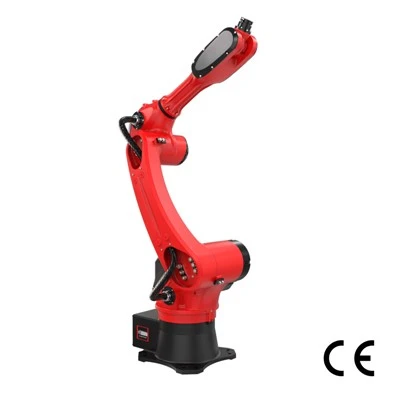
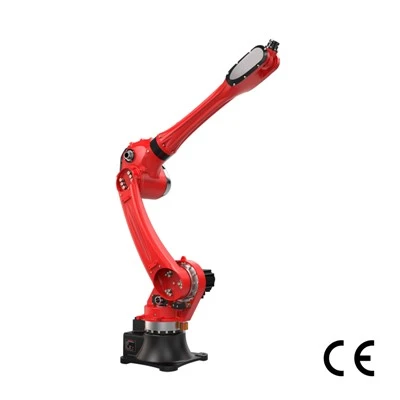
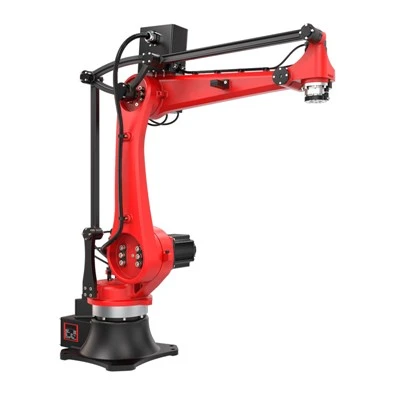
To systematically overcome these operational vulnerabilities, forward-thinking manufacturers are increasingly integrating advanced automation into their part unloading and handling workflows. Whether dealing with stamped metal panels, complex die-cast components, or delicate polymer products extracted by a specialized Injection Molding Robot, automation transforms part unloading from a manual bottleneck into a pristine, highly repeatable, and data-driven science. This comprehensive article explores how robotic unloading and handling systems dramatically enhance quality assurance, minimizing scrap rates, protecting fragile part geometry, integrating inline inspection, and elevating overall manufacturing excellence to unprecedented levels.
1. The Vulnerabilities of Manual Part Unloading and Handling
Human Fatigue, Cognitive Burnout, and Inconsistent Extraction Timing
To fully understand how robotic automation elevates quality assurance, one must first critically examine the inherent limitations and vulnerabilities of manual part unloading. In high-volume manufacturing environments, human operators must repeatedly extract parts from heavy machinery under demanding physical conditions, often exposed to high ambient temperatures, excessive noise, poor lighting, and repetitive motion strain. As long shifts progress from morning to evening, physical fatigue and cognitive burnout inevitably set in, dulling reflexes and reducing attention to detail.
Fatigue leads directly to variance in cycle times and extraction timing. If a newly molded or stamped component remains inside a hot mold, die, or fixture a fraction of a second too long, it can absorb excess thermal energy, leading to dimensional distortion, thermal degradation, or surface sticking. Conversely, erratic pulling motions can apply uneven mechanical stress to semi-molten or fragile parts, causing micro-fractures, stress whitening, or structural warping. Manual handling simply cannot guarantee the millisecond-level repeatability required to maintain uniform product quality across thousands of consecutive production cycles. This temporal variance is the silent enemy of dimensional stability.
Surface Damage, Contamination, and Ergonomic Hazards
Beyond timing variances, manual handling introduces severe risks of physical surface damage. Oils, moisture, sweat, and particulate matter from human hands can contaminate sensitive surfaces-a critical failure point in medical cleanrooms, optical lenses, and semiconductor electronics manufacturing. Furthermore, manual gripping tools, tongs, or bare hands can easily scratch delicate finishes, mar highly polished surfaces, or bend thin-walled components out of tolerance.
From a safety and operational perspective, manual unloading places workers in close proximity to dangerous clamping zones, pinch points, and scorching material. When operators are rushing to maintain line speed while constantly trying to avoid injury, inspection quality inevitably suffers. Visual defects such as flash, short shots, sink marks, or surface blemishes are easily overlooked amidst the intense physical demands of manual extraction, allowing defective parts to slip further down the production line undetected.
2. Precision, Repeatability, and Part Protection Through Robotics
Millisecond-Level Repeatability in Part Extraction
Robots systematically eliminate the variable of human fatigue by executing identical motion trajectories with absolute mathematical precision. In plastic manufacturing, for instance, an advanced Injection Molding Robot enters the open mold cavity at the exact same millisecond during every single production cycle, utilizing custom-designed end-of-arm tooling (EOAT) to lift the part cleanly without ever touching critical sealing surfaces, mating edges, or cosmetic faces.
This unwavering consistency ensures that cooling rates, ejection pressures, and thermal relaxation windows remain perfectly uniform across entire production runs. Because the robot travels along a pre-programmed, collision-free path at optimized acceleration and deceleration rates, it prevents the jarring, uncalibrated movements that often cause mechanical stress or structural deformation in fresh, vulnerable parts.
Advanced Custom Gripping and Surface Integrity Protection
Protecting complex part geometry requires sophisticated physical interfacing between the automation equipment and the manufactured component. Modern robotic handling systems utilize highly specialized End-of-Arm Tooling tailored to the exact physics, weight distribution, and material properties of the product being processed.
For delicate plastic components, engineers design EOAT featuring non-marking silicone vacuum suction cups, conforming pneumatic bladders, or soft robotic fingers that distribute gripping force evenly across wide surface areas. This prevents localized pressure points that cause indentations, sink marks, or warping. By maintaining gentle, secure control over the component from the moment of extraction through to placement on a conveyor, into a cooling fixture, or inside a sorting bin, robotic handling ensures that surface integrity is preserved flawlessly.
3. Inline Quality Control and Integrated Inspection Systems
Machine Vision and Real-Time Defect Detection
One of the most powerful technological advancements in robotic handling is the seamless integration of machine vision systems directly onto or adjacent to the robotic cell. Rather than waiting for parts to reach a distant, offline quality control laboratory hours after production, automated unloading systems can inspect components in real time during the immediate transfer phase.
High-resolution industrial cameras mounted directly on the robotic arm or positioned along its primary extraction path capture high-definition images of the part immediately upon removal from the press. Advanced artificial intelligence and machine learning algorithms analyze these images instantly, checking for critical quality parameters such as complete cavity filling, absence of flash, correct color matching, and tight dimensional accuracy. If a defective component is detected-such as a short shot, a burn mark, or a warped edge-the robot can automatically divert the part into a dedicated reject bin without ever halting the primary manufacturing line.
Closed-Loop Feedback for Process Optimization
Robotic quality assurance extends far beyond simple sorting and rejecting; it actively communicates with upstream machinery to prevent future defects from occurring. Through high-speed industrial communication protocols, inspection data gathered during robotic handling is fed directly back into the central controller of the production press or molding machine.
If the vision system detects a recurring dimensional deviation or surface flaw across multiple consecutive parts, the control system can automatically initiate minor adjustments-such as tweaking injection pressure, holding time, mold temperature, or clamping force-to correct the anomaly before it escalates into a major batch failure. This closed-loop feedback transforms the Injection Molding Robot and its handling counterparts from passive extractors into active, intelligent guardians of process stability.
4. Traceability, Cleanliness, and Downstream QA Benefits
Digital Traceability and Batch Accountability
Modern quality assurance standards frequently require strict end-to-end traceability, especially in regulated industries like automotive safety components, aerospace hardware, and medical devices. Manual handling makes strict traceability nearly impossible, as human operators rarely log every individual part's handling history, exact extraction time, or environmental variables.
Robotic systems are inherently digital and data-driven. Every action performed by a robotic unloader-including extraction timestamps, sensor telemetry, vision inspection results, handling speeds, and error logs-can be automatically logged and tagged to specific production batches or individual serial numbers via laser etching, QR codes, or RFID integration. If a quality defect is discovered downstream by a client, manufacturers can instantly trace the exact batch, machine cycle, and environmental conditions under which the part was handled, isolating the issue rapidly and preventing widespread, costly recalls.
Maintaining Sterile and Contamination-Free Environments
In industries where strict hygiene and particulate control are paramount, human presence on the shop floor represents a major, uncontrollable contamination risk. Skin particles, hair, cosmetics, and clothing fibers can easily compromise sterile medical packaging or high-end cleanroom electronics.
Robots operate cleanly without shedding biological contaminants. When enclosed in appropriate cleanroom-rated configurations, robotic handling systems maintain absolute sterility. This ensures that the high quality achieved during the core manufacturing process is never degraded by handling contamination, easily satisfying the most stringent regulatory audits and industry certifications.
5. Economic Impact: Reducing Scrap Rates and Enhancing ROI
Minimizing Scrap and Material Waste
Scrap reduction is a direct financial benefit of implementing robotic unloading and handling systems. In traditional manual operations, dropped parts, mishandled components, and undetected surface flaws contribute to high scrap rates, wasting valuable polymer resins, metals, and energy. Furthermore, restarting interrupted manufacturing runs after a mold jam or part-extraction error consumes valuable production time.
Robots operate with near-zero drop rates and exceptional path accuracy. By eliminating handling-induced damage and catching molding anomalies instantly via inline vision systems, automation drastically drives down overall scrap rates. The savings generated from reduced material waste and lower defect rates contribute significantly to a rapid return on investment (ROI).
Optimizing Labor Allocation and Upskilling Workforce
While initial capital expenditure for advanced robotics can be substantial, the long-term economic benefits extend well beyond scrap reduction. Automating part unloading frees human operators from dangerous, monotonous, and physically punishing tasks. Instead of standing at a press extracting parts for hours, workers can be upskilled to manage robotic cells, perform preventative maintenance, oversee quality analytics, and engage in higher-value problem-solving. This strategic shift improves employee morale, reduces turnover, and builds a more technically proficient manufacturing workforce.
Conclusion
The pursuit of flawless quality assurance is an ongoing journey for modern manufacturers operating in an increasingly competitive global economy. As customer expectations rise and product designs grow more intricate, traditional manual part unloading and handling methods are no longer sufficient to guarantee defect-free production. Human fatigue, extraction inconsistencies, and surface contamination represent persistent, unacceptable threats to product integrity.
Integrating robotic systems into the post-processing workflow offers a definitive, future-proof solution to these challenges. By delivering millisecond-level repeatability, protecting delicate geometries through customized gripping tools, and incorporating real-time machine vision inspection, robotic handling elevates quality assurance to unprecedented heights. Whether handling metal stampings or executing precision extractions via an Injection Molding Robot, automation ensures that every single component meeting the end user is structurally sound, visually immaculate, and dimensionally perfect. Ultimately, embracing robotic handling is not merely a strategy for boosting throughput-it is the ultimate foundation for enduring product quality, reduced waste, and long-term manufacturing leadership.