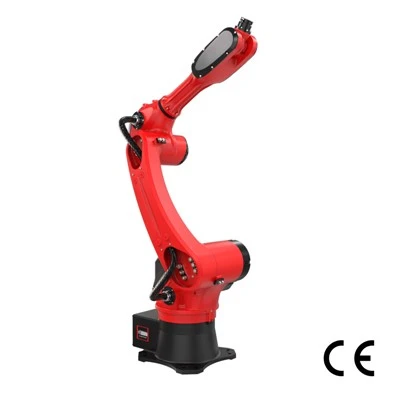
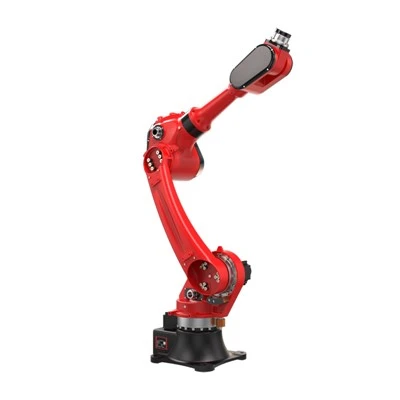
RBTIC Machine Tending Cobots automate repetitive workpiece loading, unloading and transfer between operators and production equipment. The RBTE07M0807W and RBTE12M1212W models offer 7 kg and 12 kg payload capacities, respectively, for handling metal components, plastic parts and other workpieces in machining and manufacturing operations.
Technical Specifications
|
Parameter |
RBTE07M0807W |
RBTE12M1212W |
|
Payload |
7 kg |
12 kg |
|
Working Radius |
800 mm |
1,200 mm |
|
Repeatability |
±0.02 mm |
±0.03 mm |
|
Maximum Linear Speed |
2 m/s |
2 m/s |
|
Robot Weight |
24.5 kg |
39.5 kg |
|
Protection Rating |
IP54 |
IP54 |
|
Operating Temperature |
0–50°C |
0–50°C |
|
Typical Power Consumption |
150 W |
350 W |
|
Terminal I/O |
DI/DO, AI |
DI/DO, AI |


Model Selection
RBTE07M0807W - Compact Workstations: The 800 mm reach and 7 kg payload suit layouts with shorter transfer distances and lighter workpieces, where a smaller working envelope is sufficient.
RBTE12M1212W - Longer Reach and Higher Payload: The 1,200 mm reach and 12 kg payload provide more room for machine access and workpiece transfer between the machine and nearby staging positions.
Check the Complete Tool Load: Include the gripper and other end-of-arm tooling in the payload calculation, not just the workpiece weight.
Workpiece Handling Performance
Accurate Part Positioning: Repeatability of ±0.02 mm or ±0.03 mm supports consistent programmed placement at machine fixtures, helping maintain repeatable loading positions across cycles.
Adaptable Workpiece Handling: The robot can use application-matched grippers to handle parts with different shapes and gripping surfaces, supporting varied loading tasks with suitable end-of-arm tooling.
Consistent Transfer Paths: Programmed movements between part supply, machine fixtures and finished-part collection help standardize repetitive handling sequences and reduce operator intervention.
CNC Loading and Unloading Workflow
Raw-Part Pickup: The cobot retrieves a workpiece from a designated tray, bin or conveyor.
Machine Loading: After the required machine-ready and access signals are received, the cobot places the workpiece into the fixture.
Cycle Coordination: The robot waits for machining completion and the required release signals before unloading.
Finished-Part Discharge: The machined component is transferred to a designated collection position, and the next cycle begins when the machine and robot are ready.
Machine and Control Integration
CNC Signal Coordination: Map machine-ready, door status, cycle start, cycle completion and fault signals to the robot control sequence. Confirm the available I/O and required interface before integration.
Part Feeding and Discharge: Define how raw parts enter the work area and finished parts leave it, including trays, conveyors or other handling equipment.
Gripper and Fixture Matching: Specify the end-of-arm tooling and machine fixture requirements according to workpiece geometry, clamping position and loading orientation.
Defined System Scope: Identify whether the supply includes the robot, gripper, machine interface, safety equipment, programming, commissioning and operator training.
Applications
Loading and unloading shafts, sleeves, flanges and other turned metal components.
Transferring metal housings and structural parts between staging trays and machining fixtures.
Removing plastic parts and transferring them to a collection or downstream handling station, where the robot and tooling are suitable for the task.
Repetitive handling of small metal or plastic parts in multi-step manufacturing processes.
Routine Maintenance
Joint and Cable Inspection: Check joint movement, mounting bolts and cable routing for looseness, wear or damage to identify issues before they interrupt production.
Gripper Function Checks: Inspect gripping surfaces, pneumatic lines and electrical connections to maintain reliable part pickup and release.
Contamination Control: Remove accumulated chips, dust and coolant residue from accessible surfaces, while following the model-specific cleaning requirements.
Fault Monitoring: Review alarms, abnormal motion and recurring stoppages, and follow the manufacturer's maintenance schedule for service and replacement intervals.
Request a Machine Tending Cobot Quote
Looking for a cobot for CNC loading and unloading? Share your workpiece weight, machine model, and target cycle time. RBTIC can help assess the suitable robot model, gripper configuration, and integration requirements.
Contact RBTIC today to discuss your application and request a quote.


FAQ
Q: Can a machine tending cobot operate unattended overnight?
A: Unattended operation depends on the stability of the machining process, raw-part supply, finished-part capacity, tool wear monitoring and fault recovery. The complete cell must also have appropriate safety measures and a defined response plan for abnormal conditions.
Q: How long does it take to deploy a machine tending cobot?
A: Deployment time varies with application complexity, tooling readiness, machine interface requirements, programming and site preparation. Ask the supplier to provide a project schedule covering design, installation, commissioning, operator training and production acceptance.
Q: What should be included in a machine tending cobot acceptance test?
A: Define measurable criteria for successful part loading and unloading, positioning consistency, cycle completion, fault handling and sustained operation. Test conditions should specify the workpiece, machine cycle, operating duration and required production rate before the contract is finalized.
Q: What training do operators need to run a machine tending cobot?
A: Operators typically need training in normal operation, workpiece replenishment, program selection, alarm handling and safe recovery procedures. Maintenance personnel may also require separate instruction on troubleshooting, backup procedures and scheduled servicing.
Q: What warranty and after-sales support should buyers confirm?
A: Confirm warranty duration and exclusions, remote diagnostic support, on-site service availability, spare-parts supply and response arrangements for production-critical faults. Request the applicable service terms in writing to assess potential downtime and support costs.
Q: Can a machine tending cobot handle different parts in the same production cell?
A: This depends on whether the parts can be handled within the robot's operating limits and whether the tooling, fixtures and programs support each part type. For frequent changeovers, assess the time required for gripper changes, program switching and fixture adjustment before choosing a multi-part configuration.
Hot Tags: machine tending cobot, China machine tending cobot manufacturers, suppliers, factory