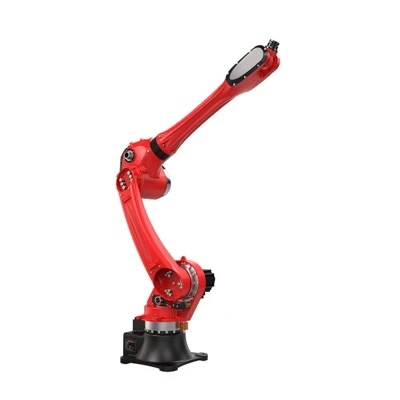
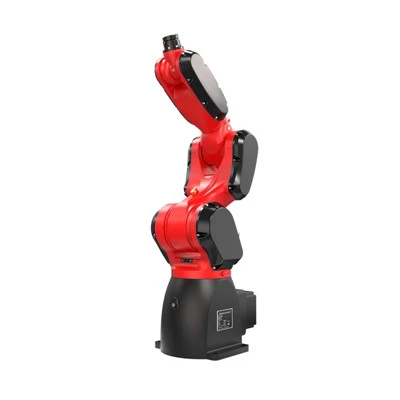
The RBTIC BRTIRUS2110A Loading and Unloading Robot is a 6-axis industrial robot designed for automated workpiece transfer between production equipment and handling stations. With a 10 kg rated payload and 2,131 mm arm length, it supports loading, unloading and pick-and-place operations across CNC machine tools, injection molding equipment and conveyor-based production lines.


Technical Specifications
|
Parameter |
Specification |
|
Model |
BRTIRUS2110A |
|
Number of Axes |
6 |
|
Rated Payload |
10 kg |
|
Arm Length |
2,131 mm |
|
Repeatability |
±0.05 mm |
|
J1 Range / Max. Speed |
±155° / 110°/s |
|
J2 Range / Max. Speed |
-140° to +65° / 146°/s |
|
J3 Range / Max. Speed |
-75° to +110° / 134°/s |
|
J4 Range / Max. Speed |
±180° / 273°/s |
|
J5 Range / Max. Speed |
±115° / 300°/s |
|
J6 Range / Max. Speed |
±360° / 342°/s |
|
Power Capacity |
6.48 kVA |
|
Power Supply |
220 V |
|
Control System |
HC Control System |
|
Robot Weight |
Approx. 230 kg |
|
Protection Rating |
IP40 |

Handling Performance
Fast Joint Motion: J4, J5 and J6 reach maximum speeds of 273°/s, 300°/s and 342°/s respectively, supporting rapid wrist movement during repeated pickup and placement cycles.
Consistent Placement: ±0.05 mm repeatability helps maintain consistent positioning at programmed loading and unloading points across repetitive operations.
Flexible Approach Angles: Six-axis articulation allows the gripper to change orientation when approaching workpieces, machine openings and transfer positions.
Working Envelope and Installation
2,131 mm Arm Reach: Supports transfer between machine access points and nearby handling stations within the robot's working envelope.
230 kg Mounting Load: The installation base must support the robot's own weight plus the additional forces generated during operation.
Six-Axis Movement Clearance: Allow space for the full arm movement, gripper, workpiece and machine doors to prevent interference during loading and unloading.
IP40 Protection: Suitable for installation environments where protection against water ingress is not required; the installation area must meet the robot's environmental limits.
Equipment Compatibility and Integration
CNC Machine Tools: 10 kg rated payload and 2,131 mm arm reach support machine tending, including workpiece loading and finished-part unloading. The workpiece and gripper combined must remain within the rated payload.
Injection Molding Machines: Supports molded-part extraction and transfer where part weight, gripper design and machine access fit the robot's payload and working envelope.
Conveyor Systems: Supports transfers between production equipment and conveyor stations within the working envelope.
Control Interface: The HC Control System supports I/O communication linkage. Available signals, communication protocols and machine-interface requirements depend on the integration scope.
Applications
CNC Machine Tending
Loads raw workpieces into CNC machines and unloads completed parts for inspection or the next machining operation.
Injection Molding
Removes molded components from the machine and transfers them to collection, inspection or downstream processing stations.
Automated Part Transfer
Moves components between defined production stations where repetitive handling can be standardized.
Supply Information
|
MOQ |
1 unit. |
|
Lead Time |
4–8 weeks for a standard robot; integrated cells require additional engineering and commissioning time. |
|
Packaging |
Protective export packaging in wooden crates. |
|
Shipping |
Sea freight, air freight or express. |
|
Documents |
Commercial invoice, packing list and applicable export documents. |
|
Supply Scope |
Robot, gripper and auxiliary equipment according to the confirmed order scope. |
Integration, Commissioning and Support
System Integration: RBTIC supports application assessment, auxiliary equipment design, I/O linkage and on-site installation.
Commissioning: Robot programs, gripper actions and machine signals are coordinated to execute the agreed loading and unloading sequence.
Remote Technical Support: Online support is available 24/7 according to the published service information.
Operator Training: Training covers routine operation and basic troubleshooting for the supplied system.


FAQ
Q: What determines loading and unloading robot cycle time?
A: Cycle time depends on travel distance, gripper operation, machine response and part handling sequence-not just maximum joint speed.
Q: Can the robot handle different workpiece sizes?
A: Yes, if each part fits within the payload and working envelope and can be securely gripped. Different sizes may require gripper adjustments or separate programs.
Q: What grippers are available for loading and unloading robots?
A: Options include pneumatic parallel grippers, three-jaw grippers, vacuum grippers and custom end effectors, depending on part geometry, material and gripping requirements.
Q: Can the robot handle multiple workpiece models?
A: Yes, if the gripper, pickup positions and programs accommodate each model. Different parts may require tool changes or program adjustments.
Q: What information is needed for a robot quotation?
A: Provide workpiece dimensions and weight, machine model, pickup and placement locations, target cycle time, production volume and layout drawings or photos.
Q: What safety equipment may be required?
A: Depending on the cell design and applicable standards, requirements may include safety guarding, interlocked doors, presence sensors and emergency stops.
Q: How is robot operation coordinated with a CNC machine?
A: The sequence coordinates machine doors, chuck clamping and release, part exchange and machining status through defined control signals and interlocks.
Q: What should a robot acceptance test cover?
A: Agree on cycle time, positioning performance, gripper reliability, machine-signal coordination and sustained operation, with documented test conditions and pass criteria.
Hot Tags: loading and unloading robot, China loading and unloading robot manufacturers, suppliers, factory